Portugal catches you off your guard. You come there with the anticipation of nice tiles and nice pastries and you leave asking yourself how to establish there on a long-term basis. This guide suggests the best places to visit in Portugal according to the actual trips, actual budgets, and actual opinions.
Bringing first-time travelers or fifth-time visitors, it is all you need to know where to go in Portugal, how much time to spend, and what most travel blogs fail to inform you. Let’s get into it.
Quick Overview: Portugal’s Top Destinations Compared
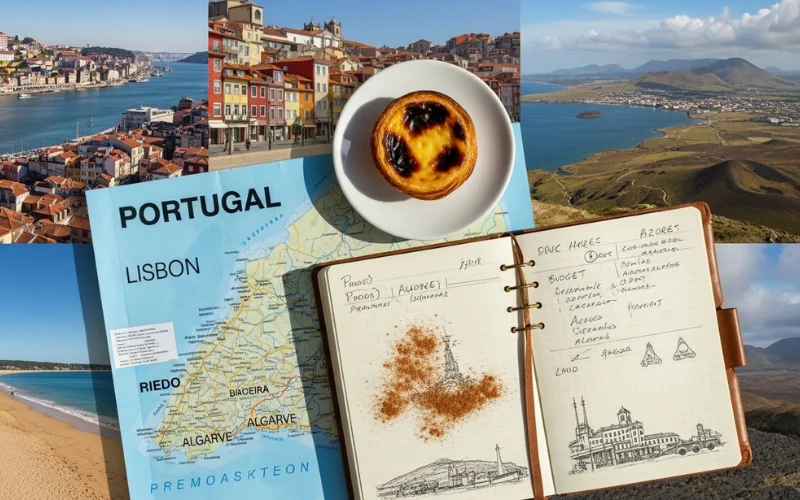 I would not like to go into the details of each region, but this is just a preview on what you should visit in Portugal basing on how you are going to travel, how much money you have and how much time you will spend. Note this table down since it maintains a significant amount of planning time.
| Destination | Best For | Ideal Season | Days Needed | Daily Budget (Mid-Range) | Vibe |
| Lisbon | First-timers, nightlife, history | March to May, Sept to Oct | 3 to 4 | €120 to €160 | Energetic, hilly, photogenic |
| Porto | Wine lovers, culture, food | May to June, Sept | 2 to 3 | €100 to €140 | Gritty, authentic, romantic |
| Sintra | Day-trippers, fairytale palaces | Weekdays, spring or fall | 1 to 2 | €80 to €120 | Magical, green, crowded on weekends |
| The Algarve | Beaches, families, relaxation | May to June, Sept to Oct | 3 to 5 | €90 to €150 | Coastal, warm, resort-friendly |
| Douro Valley | Wine, scenery, romance | June to Sept | 2 to 3 | €110 to €170 | Peaceful, vineyard-covered, slow |
| Evora | History buffs, Alentejo culture | Spring or fall | 1 to 2 | €70 to €100 | Quiet, medieval, underrated |
| Azores | Adventure, nature, solitude | June to Sept | 4 to 7 | €80 to €120 | Wild, volcanic, remote |
| Madeira | Hiking, flowers, older travelers | April to Oct | 3 to 5 | €90 to €130 | Lush, mountainous, relaxed |
| Nazare | Surfing, seafood, drama | Winter (waves), summer (beach) | 1 to 2 | €70 to €100 | Raw, authentic, thrilling |
| Braga | Religion, baroque architecture | Year-round | 1 to 2 | €60 to €90 | Young, devout, vibrant |
Such comparison will make you be at the top of most Portugal travel destinations guides out there that only present you with a list of names of cities, yet leave out the detail that most importantly counts.
Northern Portugal: Where History Meets Wild Nature
The country is the most natural and the least tourist-friendly in the North of Portugal. The cuisine is more substantial, the vino is less expensive, the folk are more welcoming, and the scenery changes to granite mountains with less than an hour. In case you get time to visit only one region and one city, I will be honest and advise you to visit the North.
Porto: Portugal’s Most Underrated City
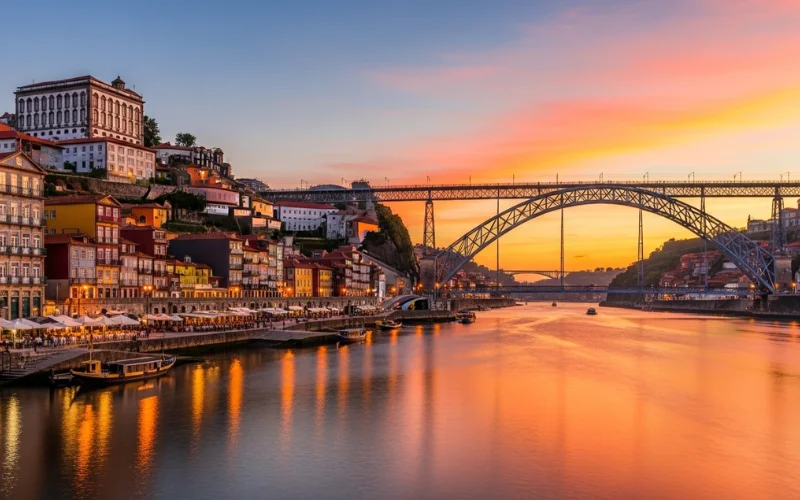 I shall put it directly: Porto had taken my heart away better than Lisbon ever had. This is un-civilized energy that is unpolished, and Lisbon has gradually been losing it in tourism. The Ribeira district over the Douro River resembles a picture on a postcard, however, its aroma is of grilled sardines, and its sound like somebody playing fado through an open window.
Get across the Dom Luis I Bridge in the evening. Spend one morning in Livraria Lelo (the Harry Potter series was inspired by it, though it is better to arrive early or you will have to wait in line with an online voucher). Eat a francesinha, a well-known meat sandwich in Porto, which is marinated in beer sauce, at Cafe Santiago. And go to the Bolhao Market once it is renovated it is a spectacle. Porto is the sort of place you spend two days, but ultimately start to regret that you only booked four.
It is not a difficult journey: the Alfa Pendular train between Lisbon and there lasts approximately 2 hours and 40 minutes and costs about 20-35 Euros. This city is also a wonderful home base when you are planning on places to travel in Portugal within the rest of the North.
Braga: The Spiritual Capital You Did Not Expect to Love
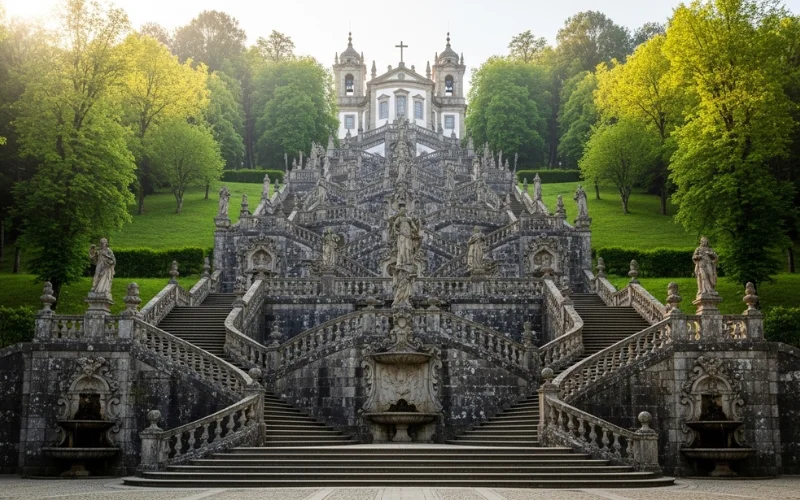 Braga surprises people. The city is one of the youngest in the whole of Portugal, due to its university, therefore, it combines the antiquity of religious traditions with the truly vibrant cafe and bar culture. One of the most photogenic places in Portugal is the Bom Jesus do Monte sanctuary, with its monumental baroque staircase, and which is a UNESCO World Heritage Site.
Dine at Retrokitchen which offers innovative Portuguese cuisine or have a traditional meal at the restaurant Tibias de Braga which is famous due to slow roasted pork. A single day should be sufficient to explore the best the city has to offer, but two days would allow you to breathe and explore without haste. Braga is an excellent day trip excursion (or overnight excursion) of Porto (approximately 50 minutes via train).
Guimaraes: The Birthplace of Portugal
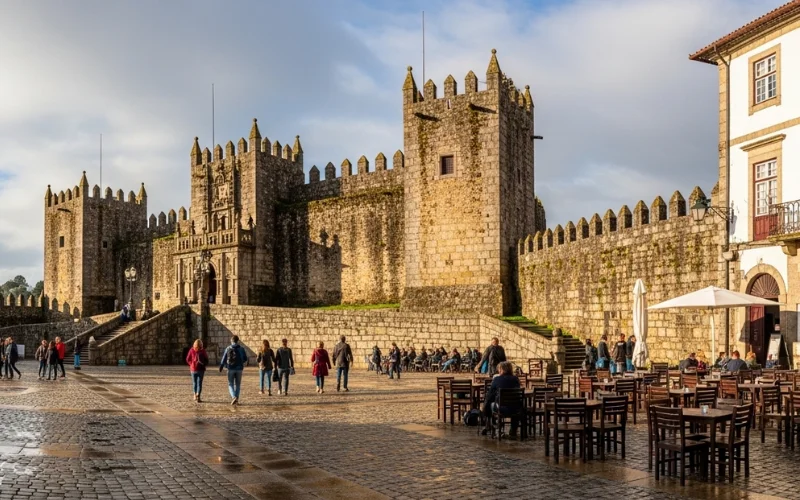 This is where Portugal started literally. Guimaraes is the birthplace of the first king, Afonso Henriques, and this title is tendered with almost no boasting by the town. The medieval center is a UNESCO World Heritage and it is like a living history museum with no price of the ticket.
See the Castle of Guimaraes, the Palace of the Dukes of Braganza and ride the cable car to the top of the mountain of panorama views; Penha. Braga is approximately 25 minutes by train and thus it would be easy to visit both on a one day trip out of Porto. Guimaraes is one of the most significant Portugal destinations.
Douro Valley: Wine Country at Its Finest
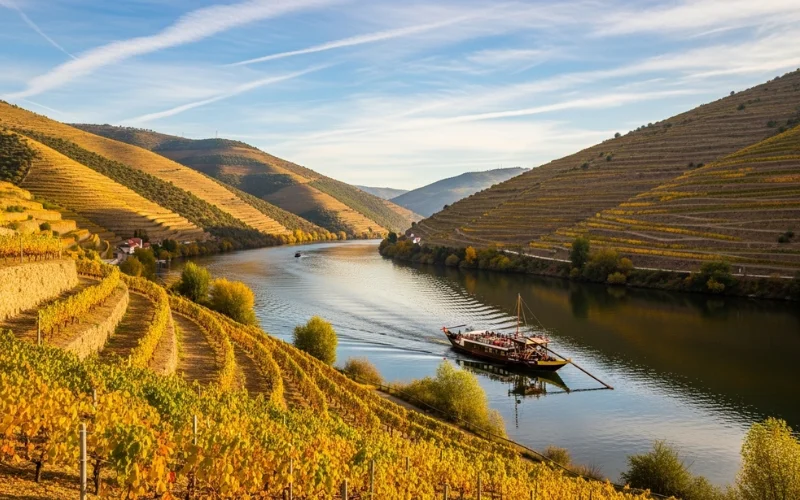 Port wine is produced in the Douro Valley and is one of the most beautiful river valleys in the whole of Europe. The terraced vineyards ascend to the impossibly steep hillsides and during autumn the entire landscape becomes gold and amber. This cannot be compromised on, in case you are a lover of wine.
It can be viewed as a day trip when you visit Porto, but it is the proper step to spend a night in a quinta (wine estate). Most quintas have wine tasting options, vineyard tours as well as multi course dinner at inconceivable prices. Average charges are expected to be around 100-180 per night in a quinta of standard level including breakfast and a taste. The historic Douro rail between Porto and Pocinho is one of the most scenic Portuguese trains as it traverses the river throughout the route.
Peneda-Geres National Park: Portugal’s Wild Side
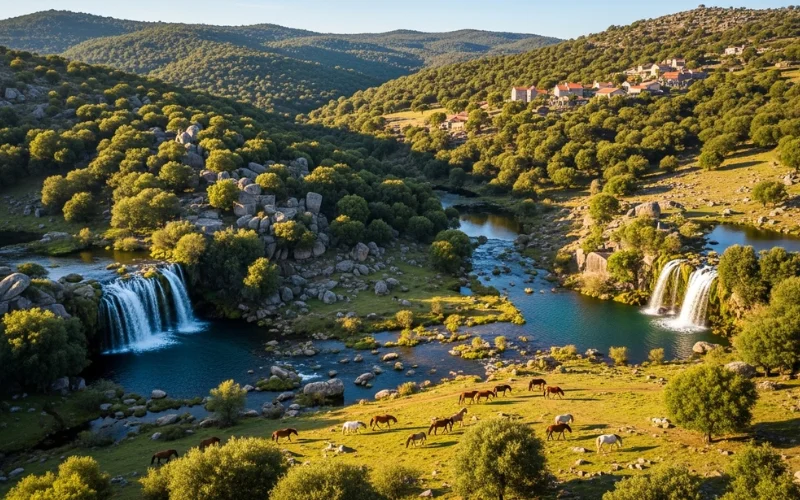 This is what most guides to the Portugal vacation spots leave out in a total ignorance: Peneda-Geres is the national park of the country and it is stunning. Believe in waterfalls, old oak woods, wild horses, and granite villages which have not seen alteration in centuries.
Mezzo Porta and the Cascatas do Tahiti (a set of natural pools of rocks) are also places of must visit in summer. A car will be required to travel, and the phone signal is weak in the more remote valleys. That is part of the charm. Geres will be ideal should you wish to balance both urban exploration and a certain touch of the wilderness. It is a one of the best destination guides that can be bookmarked by the adventurous travelers.
Central Portugal: Castles, Culture, and Coastal Charm
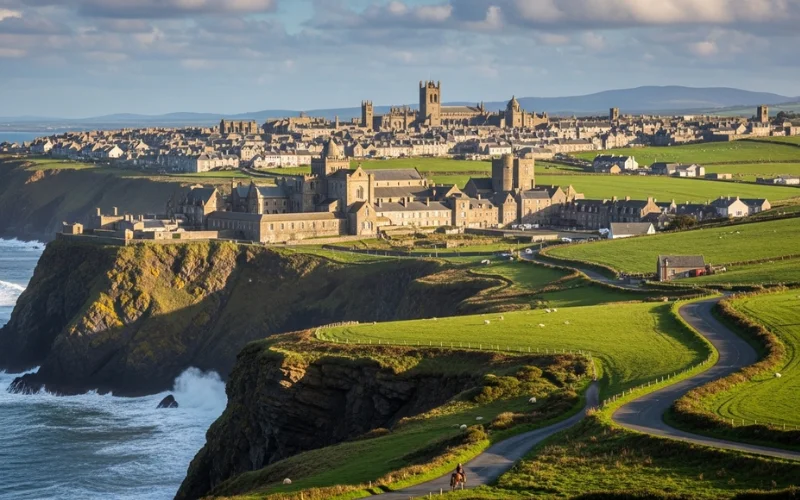 Central Portugal is the bridging tissue between the North, with all its bustle, and the renowned South, and it is shockingly neglected. It is the place where some of the most significant historical sites of the country are located, the wildest coastline, and some of the towns that should be unique places to visit in Portugal.
When you are driving between Lisbon and Porto (or the other way around), the Central region provides you with a dozen reasons to visit. And in case you pass it by altogether you are missing some of the most memorable places in Portugal which exist.
Coimbra: A University City with Soul
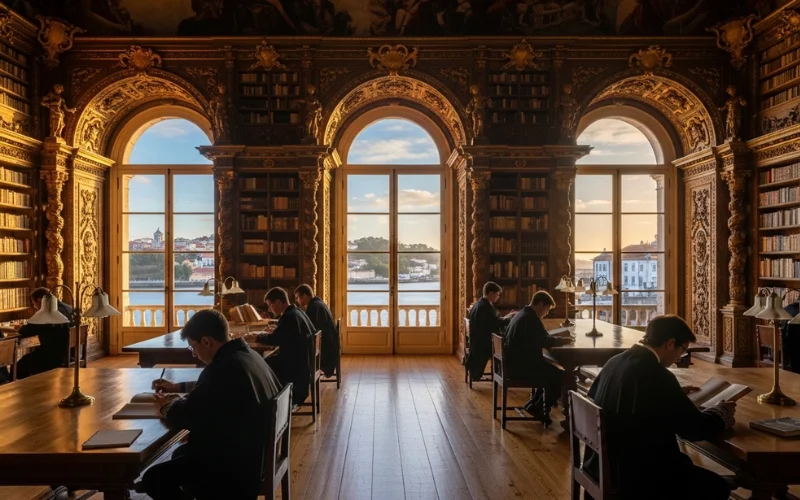 The university of Coimbra is one of the oldest ancient in the world (established in 1290) and the entire city is centered on it. Students continue to wear the old fashioned black capes and during warm evenings you will find the fado being sung in the bars of the old town. The fado of Coimbra is quite another thing, as it is sung by men, and it is connected to the life of the university, but not to the sea.
The Joanine Library within the university is overwhelming. Gold, and baroque, and inhabited by bats that keep the old books free of insects. Seats are quickly sold and one should reserve tickets a day or two in advance. Coimbra is a convenient half-day rest, however, between Lisbon and Porto, or you may have a day of sightseeing in the Botanical Garden and the Machado de Castro Museum.
Nazare: Big Waves and Bigger Personality
 Nazare is the place where surfers ride over apartment buildings. The underwater canyon further increases the Praia do Norte break, which regularly generate waves over 20 meters in winter. Nazare, though, is also a fishing village in its heart and the upper town (Sitio) provides cliff views that will make your palms sweat.
Take the funicular that goes between the beach and the cliff-top. Grill fish at a beach restaurant and the proprietors hang their catch on wooden racks in the sun. November to February is the best season of waves and June to September is the best season of relaxation of the beach. It is one of the Portugal vacation ideas that are applicable in any season due to various reasons.
Obidos: Charming but Worth the Honest Take
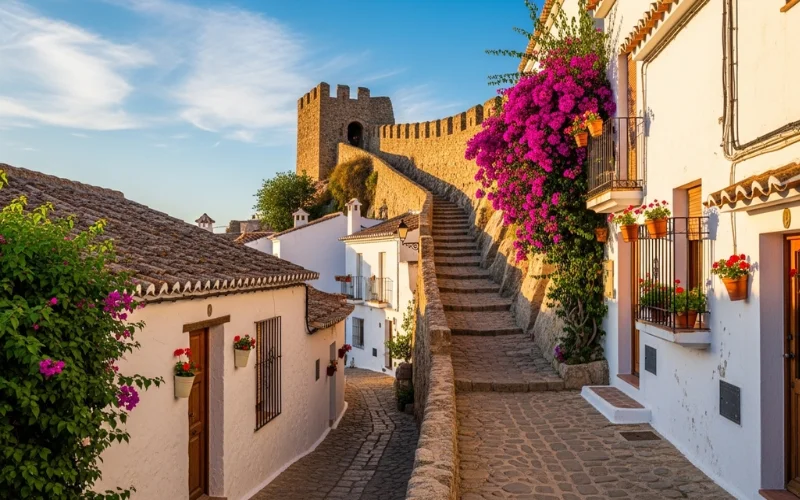 I would like to be honest with you about Obidos. It is beautiful, no doubt. The whitened walls, the bougainvillea, the medieval castle walls that you can walk through. It takes photos as if it were a dream, and the ginjinha (sour cherry liqueur) in chocolate cups is a new cool thing.
It is also quite small, quite touristic and even theme parkish when you go there during peak hours. My sincere suggestion: visit it early in the morning or late in the afternoon, spend two to three hours there and go with that to the beaches of Nazare or the Silver Coast. Obidos delivers provided that you have realistic expectations. You may also be disappointed in case you have planned a full day of exploration.
Tomar: The Knights Templar City
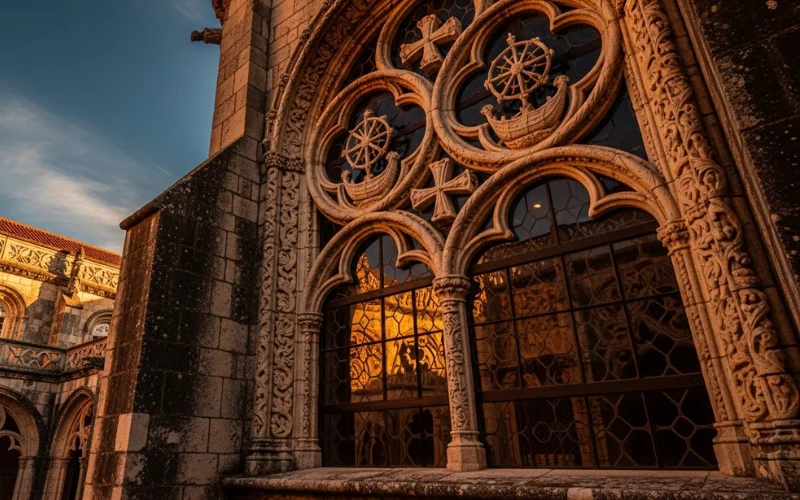 Tomar is among the most intriguing places to visit in Central Portugal and it is hardly described in most travel guides. The headquarters of the Knights Templar in Portugal and then the Order of Christ was the Convento de Cristo, which was a UNESCO World Heritage site. Its architecture is an extreme blend of Romanesque, Gothic, Manueline, and Renaissance architectures which are superimposed atop one another.
The town proper is a quiet and good-looking one, with the Nabao River as its centre. Spend at least half a day here. The best places to see within 30 minutes drive are the Monastery of Batalha or the monastery of Alcobaca both of which are UNESCO sites.This three monasteries are among the must do in Portugal experiences that is ignored due to the fact that it is neither a beach nor a large city.
Aveiro: The Venice of Portugal (Sort Of)
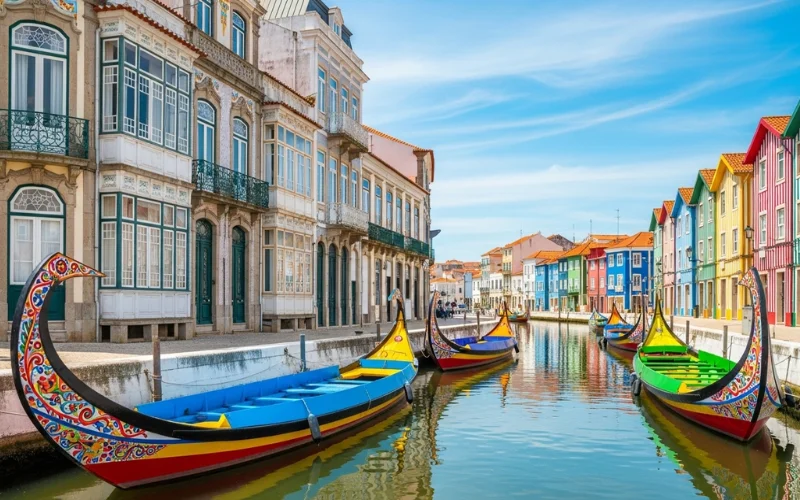
People refer to Aveiro as the Venice of Portugal, because of the canals used in the town, and painted moliceiro boats. Is that comparison accurate? Actually, not so much, however, Aveiro has its own attraction that does not require the Venice tag. The Art Nouveau style on the main canal is stunning, the ovos moles (sweet egg pastries) are smooth and the beach of Costa Nova right there has those classic striped houses.
Aveiro is a day outing of Porto (around an hour on a train) or a quicker detachment once you are driving southwards. It is the type of place which makes two or three hours spend right to go on a boat ride, have pastry, and take photos of those colorful houses without being in a hurry.
Lisbon and Surroundings: The Heart of Portugal
The secret of Lisbon toppling all the lists of places to visit in Portugal cannot be by marketing alone. The city genuinely delivers. However, the Lisbon area is more than the capital and it is made up of Sintra and Cascais, which in my opinion makes this area the best place to make any first time visitor to visit.
This in itself is a week of your journey, and you have not sampled yourself there. The combination of the city culture, sightseeing at the various palaces, and a visit to the beach is difficult to be matched anywhere in Europe.
Lisbon: Seven Hills of Nonstop Discovery
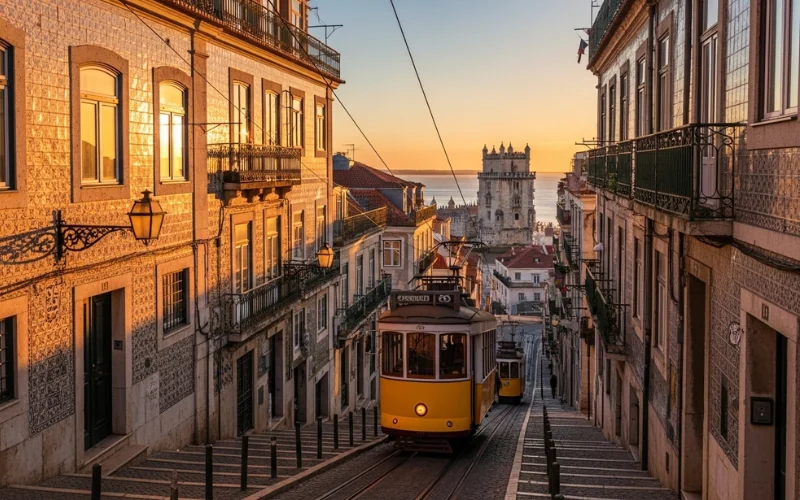 Lisbon is constructed on 7 hills and your calves will know them all. The most ancient and the most picturesque section of the city is Alfama district with its fado houses and crossways. Belem also is the location of the mythical tower, the Jeronimos Monastery and the famous Pasteis de Belem bakery where ancient recipe of the pastel de nata is preserved since 1837.
The LX Factory is a former industrial complex that has been turned into an independent and filled with bookstores, restaurants, and independent shops that should not be neglected. Time out Market is also worth visiting when it comes to lunch, but it becomes crowded by 1 PM. And, please, consider before getting packed to Tram 28. It is also known, but it is also excessively congested and pickpocket infested. It is really more pleasant and liberating to walk the same route on foot.
To practical travel tips and planning it should be said that Lisbon metro is affordable (a single ticket costs approximately 1.50 with a reusable card Viva Viagem), and Uber and Bolt trips within the city do not exceed 5 to 8 euros. Free entry to museums and public transport (starting at approximately 22 euros for 24 hours) is included in the Lisboa Card that is worth the money in the short run.
Sintra: Fairytale Palaces and Real Crowds
 Sintra is magical. The Pena Palace is painted in bright yellow and red, and it is on the top of a foggy mountain like in a book of children. Even more impressive in most of ways is Quinta da Regaleira with its initiatic well and underground tunnels. The entire cultural scenery is a UNESCO World Heritage location.
However, this is what no one will tell you: you simply cannot fail to book tickets online beforehand. Pena Palace and Quinta da Regaleira are constantly sold and getting there without any ticket will result in rejection. Go during a weekday, preferably, and come before 9.30 AM, and take comfortable shoes since the paths are steep and in most cases, slippery. Sintra is 40 minutes by train (approximately 2.30 each way) of Lisbon, and is one of the simplest and most best places to go in Portugal to visit as a day trip.
Cascais: Beach Town with Substance
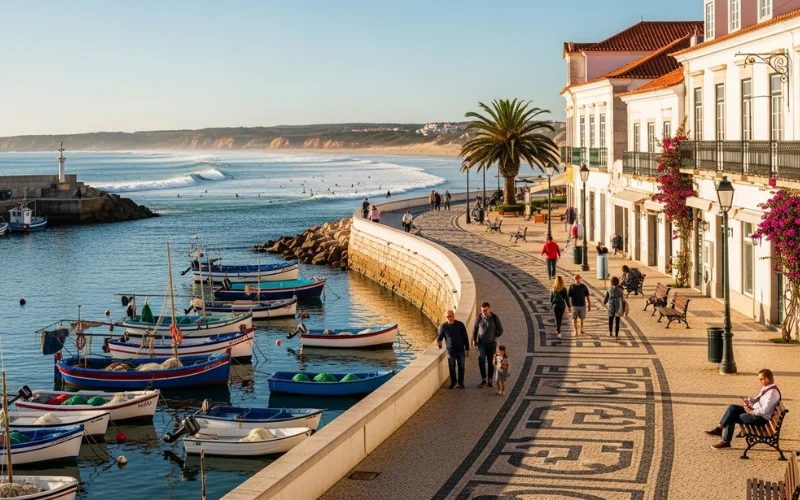 Cascais is situated on the Lisbon train end in about 35 minutes to the Cais do Sodre station. It was a fishing village, then a royal summer resort and currently an advanced seashores resort with great restaurants, modern art museum (Casa das Historias Paula Rego), and access to Guincho Beach which is one of the best surf breaks in the Lisbon region.
I adore the fact that one can mention that Cascais is more of a real town than a tourist attraction. There are human beings that are living in the area, children riding bikes along the promenade, and the fish restaurants near the marina are some of the freshest sea foods that can be located in the area of Lisbon. It is either just a half-day or even full-day tour and a mix with a visit to the theatric Boca do Inferno (Hell’s Mouth) sea cliff is a good plan.
Alentejo: Portugal’s Best Kept Secret
Portugal is a country whose Alentejo region extends to the south-central region of the country, and it is here that the country goes into a pace that borders on meditative. Hills and hills of cork oak forest, whitened villages, fields of wild flowers and some of the finest food and wine in the country. The Algarve is the beach resort in Portugal, whereas the Alentejo is the soul of it.
It is pure off the beaten path Portugal. There are no crowds or chain restaurants to be found and no people in a hurry. The result is one of the most rewarding traveling in the whole of southern Europe.
Evora: A Roman Temple in Your Morning Walk
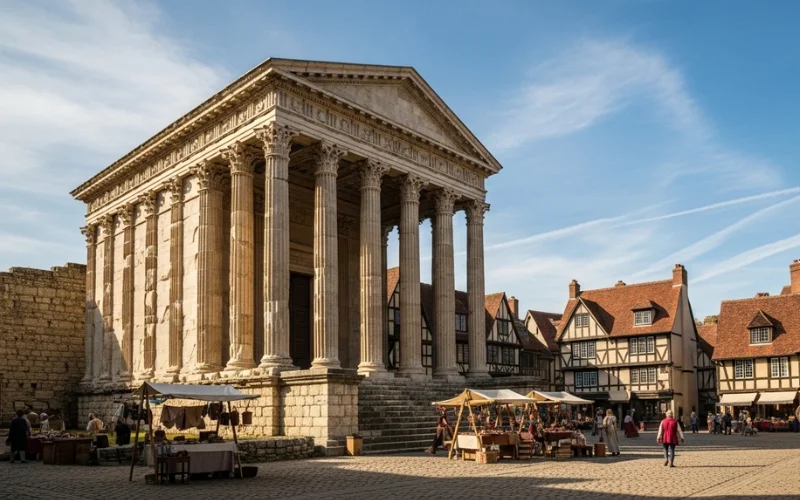 Evora is the capital of the Alentejo and is a world heritage site. Roman Temple of Diana is situated in the middle of the city and the columns are well maintained up to the sky blue. It is as shocking as it is interesting, the Chapel of Bones with the skulls and the bones of the monks of over 5,000.
The city is small to an extent that one can walk around in a day. Eat typical Alentejo in Dinner in Botequim da Mouraria to have dinner and drink Alentejo wines, as it has few tables, it is also better to reserve a table in advance. Alentejo wines have been recognized as one of the best wines in Portugal and they are much cheaper as compared to those of Douro. A bottle of excellent wine of local origin does not cost more than 15 Euro in a restaurant.
Comporta: The Fashionable Beach Nobody Knew About
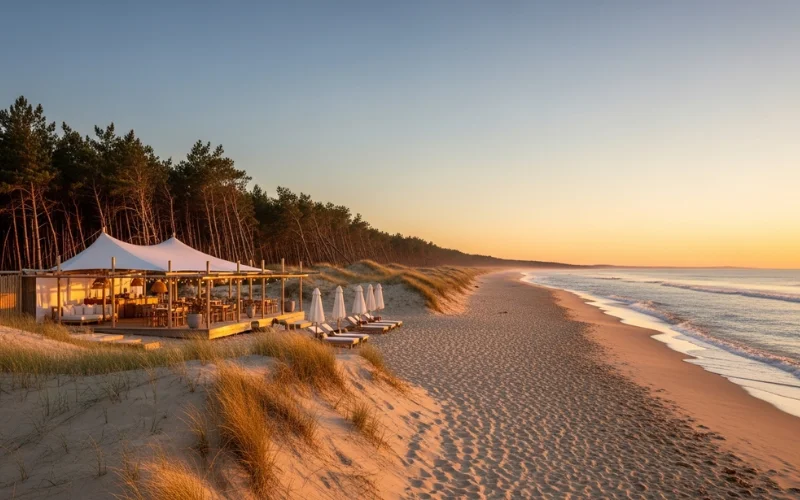 Comporta has been hushpuppied its way to becoming one of the hottest tourist spots among the insiders in Portugal. This is some 90 minutes south of Lisbon and in this coastline, there are clear, unsaturated beaches supported by rice paddies and pine trees. It has been referred to as the Portuguese Hamptons but that is farfetched though it brings in a glamorous crowd.
It is the contrast that makes Comporta special. The beach restaurants offer grilled fish on wooden tables with your feet in the sand, but the clientele is a blend of Lisbon creative types and European vacationers who are seeking something not as lively as the Algarve. Comporta town is where you will find the hidden gems in Portugal which has a good infrastructure.
Monsaraz: A Medieval Village Frozen in Time
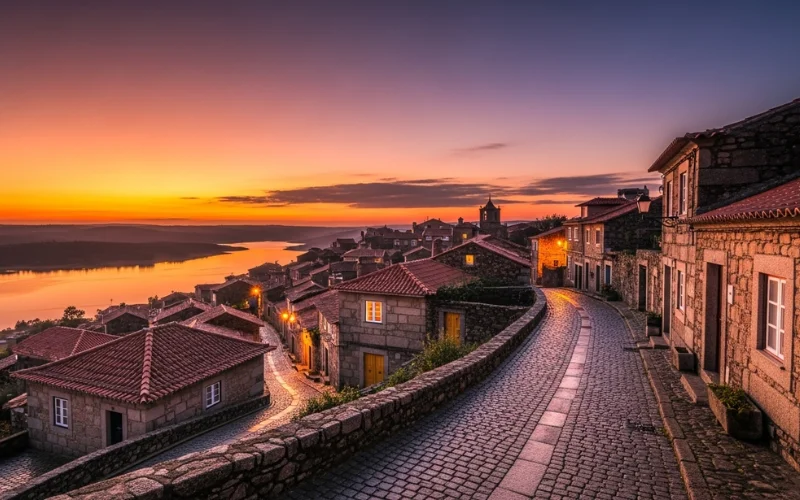 The small walled village Monsaraz is located on a hill top above the largest man-made lake in Europe the Alqueva reservoir. The village has an approximate population of 50 permanent residents and the sense that one gets as she walks down its one cobblestone street at sunset is that they have stepped into a medieval painting.
This is approximately 45 minutes by car to Evora and it is a half-day outing that is really ideal. The stargazing in this case is superb as Alqueva region is recognized as Dark Sky Reserve. On a clear night when you enter, you are going to see the Milky Way with your naked eyes. It is one of the most romantic places in Portugal particularly among a couple.
The Algarve: Beaches, Cliffs, and Beyond the Tourist Cliches
I will discuss the elephant in the room: It is true that some of the Algarve is touristy. Albufeira has a row of bars which might be found anywhere in southern Europe, and certain resort towns are generic. However, it would be inaccurate to judge the whole of Algarve based on this, since the region is equally blessed with some of the most lovely coastline in the earth.
The secret is in going to where and when. A totally different atmosphere is in the western Algarve of Lagos and Sagres and in the eastern Algarve of Tavira and Faro. And going in May or June or September rather than in July and August changes the difference between crowds and prices by a vast margin.
Lagos: Adventure Meets History
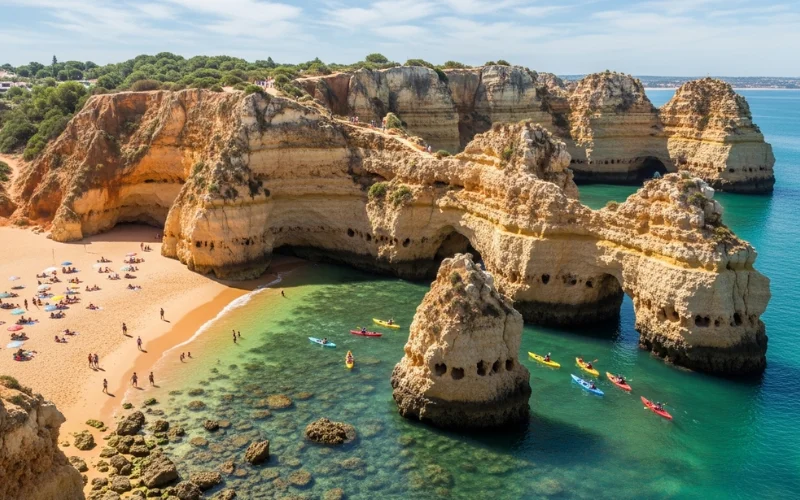 My favorite Algarve town is Lagos and I do not believe that it is close at all. The old town is very charming, the beaches magnificent (Praia Dona Ana, Praia do Camilo and the Ponta da Piedade grottos), and there is never a lack of diversity in the restaurants and night life to busyness into several days.
The boat tour is available where you can visit the sea caves, kayak through the cliffs, or just make a walk through the coastal trail, which links a number of the beaches on the summit of sandstone bluffs. Lagos too has real history: it was the start of most of the Age of Exploration expeditions of Portugal. It is a chilling account of that moment in the old slave market (Mercado de Escravos) in the central square.
Faro and the Ria Formosa: The Algarve’s Hidden Coast
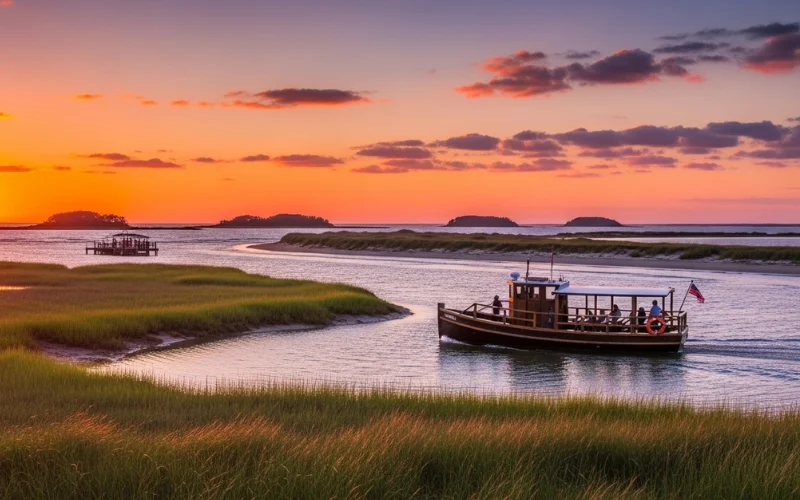 The majority of the travelers arrive at Faro and right away fly towards the west, to Lagos or Albufeira and, therefore, they miss one of the most coolest places in Portugal. The system of lagoons, barriers, salt marshes and abandoned beaches is called Ria Formosa Natural park and is approximately 60 kilometers long and is found along the coast.
Take a ferry to Ilha Deserta (Desert Island) and spend a day in the beach in one of the most isolated places. Olhao is a small village that is ignored, having an excellent daily market and one of the best restaurants in Algarve, focusing on seafood. Eastern Algarve in general is cheaper and Portuguese than western part and the Tavira, some 30 minutes east of Faro, is a charming little town, which is worth, at least, an overnight stop.
Sagres: The End of the World
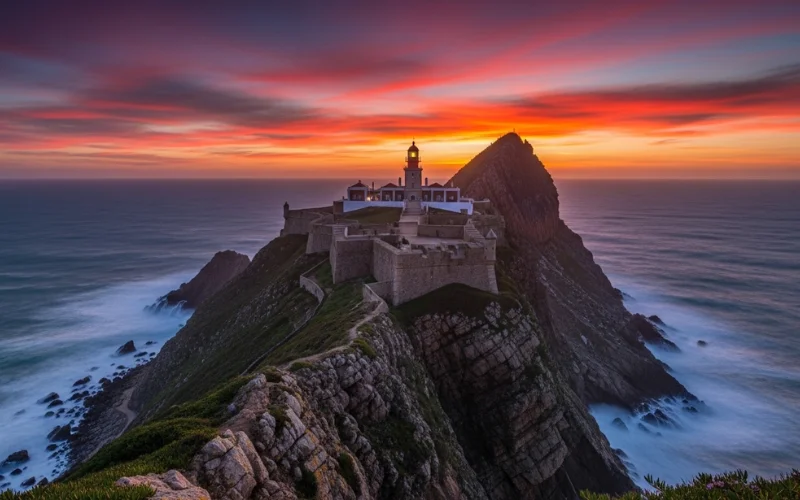 Sagres is on the very south-western tip of mainland Europe, and has always been a land of attraction to those who like extremes and finishes. The castle in the blustery headland, the melodramatic Cape St. Vincent lighthouse and the unrelenting Atlantic waves all make it into a backdrop that is primitive and humiliating.
It is a surfing resort, although you need not surf, the rough coast paths and the feeling that you are on the edge of the continent all make Sagres worth the journey. It lies about an hour west of Lagos and on a picturesque road which traverses a few little villages, and deserted beaches. To know why the Portuguese were the first Europeans to sail the open ocean, go to the Cape St. Vincent and look south. Until Africa, there is nothing but water.
The Islands: Azores and Madeira
The islands of Portugal lie in the Atlantic Ocean and they feel like some other countries altogether than the mainland itself. The Azores are barbaric and volcanic. Madeira is green and hilly. Both are getting more and more popular as portugal holiday destinations and deservedly so. Low cost airlines now fly between Lisbon and Porto and both archipelagos, and flights are occasionally as low as €30 to 60 each way in case you book in advance.
Calling an island or both islands to a Portugal journey means some travel planning, yet it is totally well-deserved in case time can afford it.
The Azores: Europe’s Best Kept Natural Secret
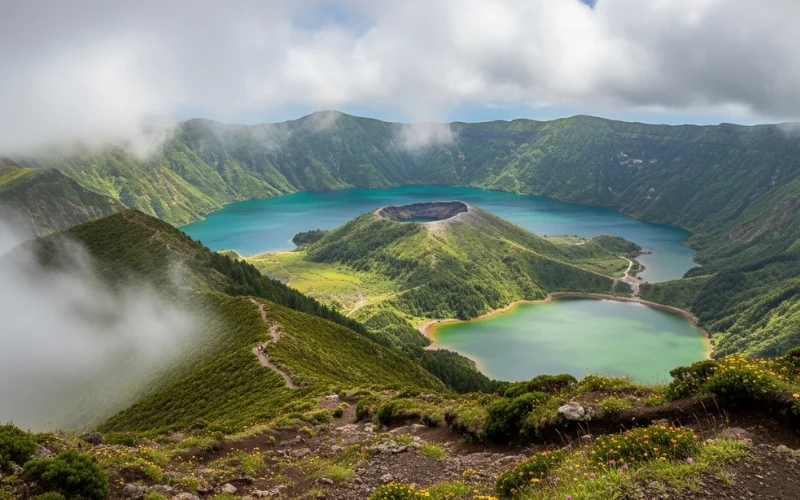 The Azores are 9 volcano islands that are approximately 1500 kilometers west of Lisbon; and they are not like any other place in Europe. The most accessible and most to see on the first visit is the largest island, Sao Miguel, and includes the twin lakes of Sete Cidades (one green, one blue and located within a volcanic crater), the hot springs at Furnas, whale watching trips, and the hiking paths that resemble New Zealand landscape.
There are no more than four or seven days to spend on Sao Miguel and see the best. There is more time available, the islands of Faial, Pico, and Flores characteristically have their own way. The city of Pico boasts of the highest peak of Portugal and the vineyard culture as a UNESCO site. The end of the earth is the best thing that Flores can feel. The Azores will be fine in the event that you seek nature, adventure and pure solitude instead of nightlife and shopping.
Madeira: The Garden Island
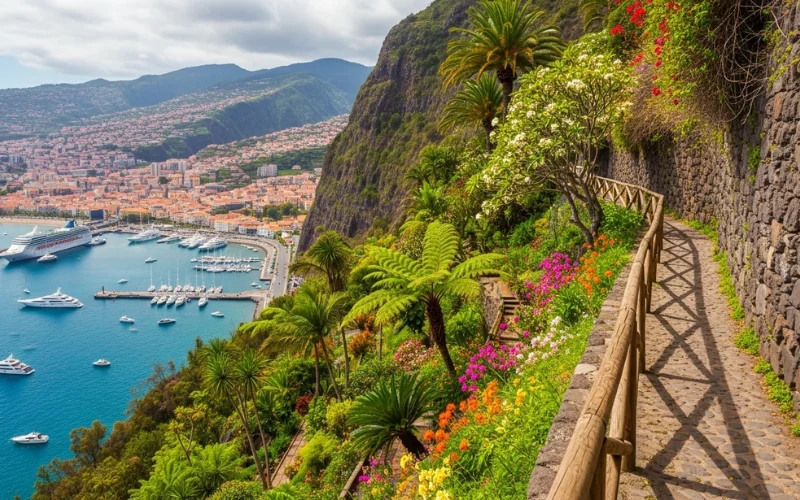 Madeira is located approximately 1000 kilometers south west of Lisbon and the perception of the destination among older travelers is also evolving. There are hiking trails (levada walks or trails along irrigation channels that cross the mountains) in the island that are amongst the most pleasant hiking in Europe, varying in difficulty of easy flat tracks with sea vistas to serious mountain trails.
The capital Funchal boasts a vibrant food culture, great botanical gardens, and a cable car ride to the top of Monte where there is a panoramic view. The Mercado dos Lavradores is a gyroscopical scenic treatise of tropical fruits (to taste passion fruit and custard apple). Madeira will not fail to impress you in case you are fond exploring local food culture. You will spend three or five days here, and hire a car to visit the waterfalls of the northern coast and sea precipices.
Hidden Gems in Portugal That Most Tourists Miss
All the guides discuss Lisbon and Porto. Not so many speak of the treasures which portugal hides up in its rural hinterland and along its little-known shores. It is these that will cause seasoned travellers to fall in love with the nation once again, and they would not be visible in the standard best places to visit Portugal listicle.
Perhaps you have already been to the larger cities and you are looking to do something new when you come back, or you just want to explore quieter Portugal off the beaten path experiences the first time around then you should take these three locations into serious consideration.
Monsanto: Portugal’s Most Extraordinary Village
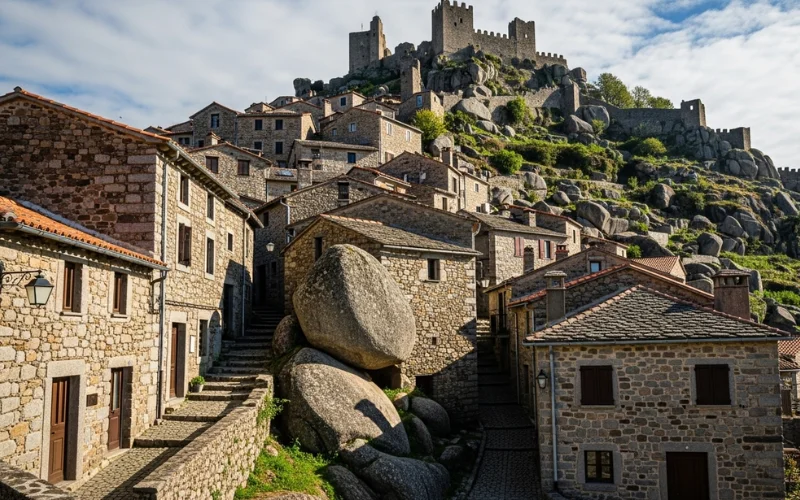 Monsanto is constructed upon and about the huge granite boulders. Houses squeeze between rocks, the streets are cut through under the massive rocky overhangs, and the entire village is the result of organically sprouting out of the hillside. It was also declared as the most Portuguese village in the country as far back as 1938 and the title has been proving that.
It takes a car and dedication to get here (it is in the sparsely populated interior, near the Spanish border) but that isolation is some of the charm. The panoramas at the castle ruins on the top are stunning. Monsanto is such a unique places to visit in Portugal that you will not forget it even when you have forgotten which beach this was.
Ponte de Lima: Portugal’s Oldest Town
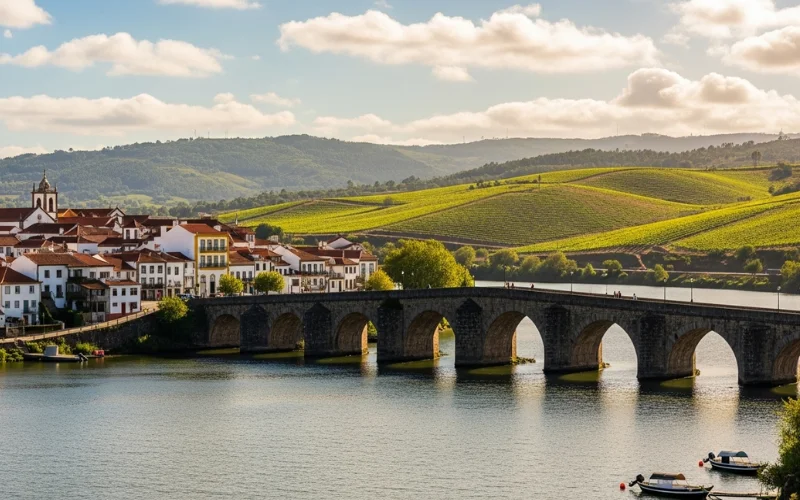 The oldest town in Portugal is Ponte de Lima, the medieval bridge across the River Lima is one of the prettiest portions of that country. Vineyards provide vinehod wine (vinho verde) in the town of Minho and the spot where the town is situated is close to the market on Monday that has been operational every bi-weekly since 1125.
It is a quiet and immensely traditional environment in which life flows at a slow pace and the food is exemplary. When driving across Northern Portugal or even Peneda-Geres, Ponte de Lima can serve as a historical stop and a possibility to enjoy the vinho verde in the very place of its production.
The Schist Villages: A Hidden Network of Stone
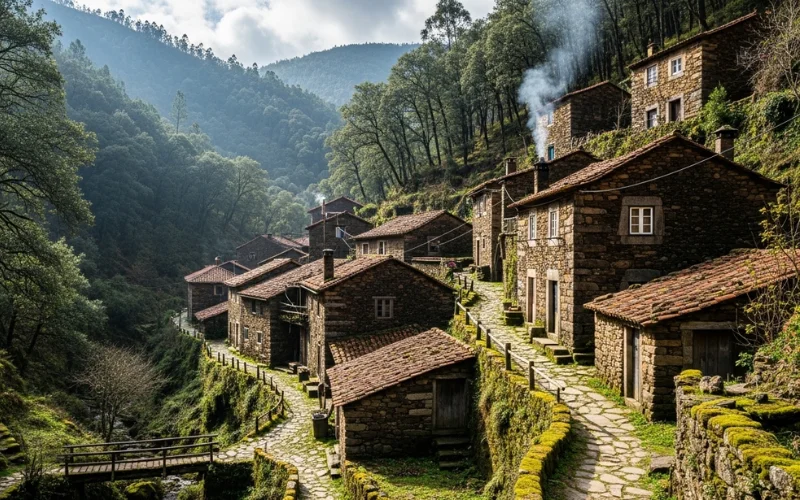 Aldeias do Xisto (Schist Villages) a group of 27 old fashioned village communities constructed of darker schist rock are scattered across the mountainous interior of Central Portugal close to the Serra da Lousa. No one has ever heard about them, and that is what makes them so special to tourists. The villages were well-preserved and linked with trails and hiking and cycling paths.
According to Gondramaz, Talasnal and Cerdeira are some of the most traveled and even they receive a small portion of the foot traffic that Sintra or Obidos receive. You have to go there to feel the hidden portugal to its purest form, and the Schist Villages can give you that feeling, which no city or beach can. It is an experience, in which an adequate travel gear setup is the difference maker, as trails can be challenging and isolated.
Practical Travel Tips: What You Actually Need to Know
Most things to do in Portugal guides do not include the logistics which is annoying, since practical stuff is what ruins or makes a trip. The following section includes the information that saves you money, time and headaches.
Best Time to Visit Portugal
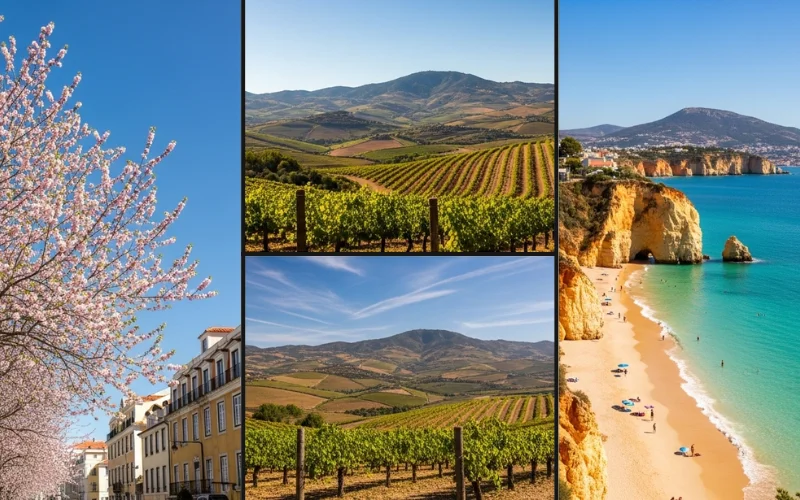 Portugal is a place that is visited throughout the year though the various parts have their best seasons at various times. The following is a season-by-season breakdown:
| Season | Best Regions | Weather | Crowds | Prices |
| Spring (March to May) | Lisbon, Alentejo, Central | 15 to 22°C, occasional rain | Low to moderate | Budget-friendly |
| Summer (June to August) | Algarve, Azores, Madeira | 25 to 35°C, dry | High, especially Aug | Peak pricing |
| Fall (Sept to November) | Porto, Douro Valley, Algarve | 18 to 28°C, pleasant | Moderate, dropping | Good deals |
| Winter (December to February) | Lisbon, Nazare (waves), Madeira | 10 to 16°C, rainy spells | Low | Cheapest rates |
Most visitors love May, June, September, or the early part of October: it is warm, there are no crowds, and the prices are not too high.
Getting Around Portugal
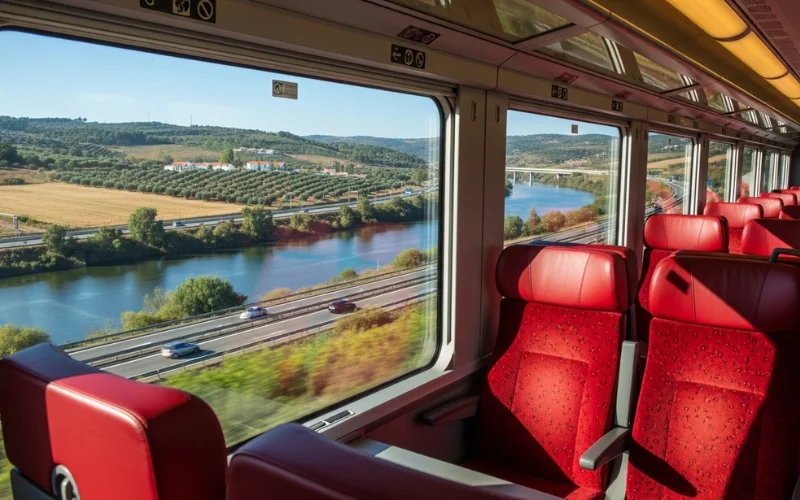 Portugal is properly networked in terms of trains and busses and a car is not needed in the main cities. The Alfa Pendular high-speed train takes less than three hours to cover Lisbon to Porto. The Rede expressos buses serve minor towns that are not served by the trains.
Nevertheless, a rental vehicle will be useful to the Alentejo, the Douro Valley, the Peneda-Geres, and to some parts of the Algarve coast. Book the agency with a good reputation and do not choose the lowest prices at Lisbon airport where the unpleasant surprises and fake insurance add-ons are the order of the day. Another piece of advice that actually saves money: fly into Porto on an open-jaw ticket with the departure and Lisbon as the destination and you can do away with the backtracking completely.
Budget Breakdown: What Portugal Actually Costs
Portugal is still one of the cheaper states in Western Europe; however, Lisbon and Porto have been slowly becoming significantly more expensive over the past few years. The budget outline below is realistic and on a daily basis:
| Budget Level | Accommodation | Meals | Transport | Daily Total |
| Budget | €30 to €50 (hostels, guesthouses) | €15 to €25 | €5 to €10 | €50 to €85 |
| Mid-Range | €70 to €130 (boutique hotels, Airbnb) | €30 to €50 | €10 to €20 | €110 to €200 |
| Luxury | €180 to €350+ (5-star hotels, quintas) | €60 to €100+ | €30 to €50 | €270 to €500+ |
One can have a normal dinner in the middle of a town in a non-touristy restaurant with two people and wine that costs around 35-55 euros. Coffee is between 0.70 and 1.20 and the pastel de nata costs an average of 1.20 to 1.50. The individuals who desire to get the most out of their euros also know other tips for budget travel strategies that will not cost them the experience.
What to Book in Advance (Do Not Skip This)
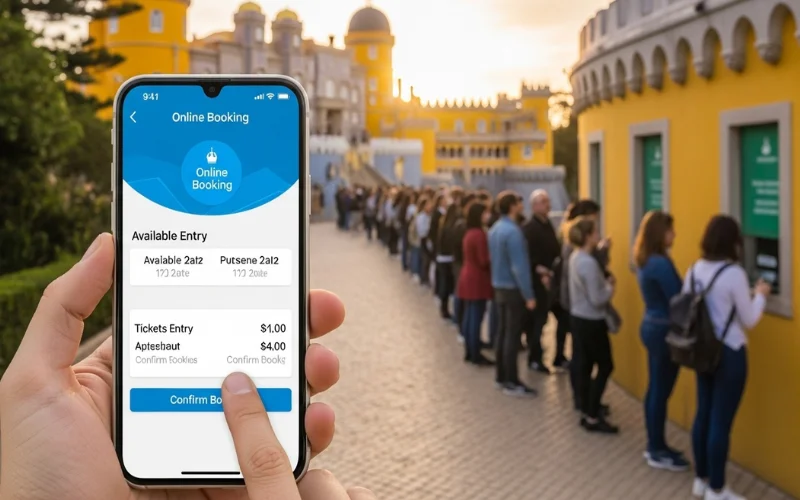 This is where I would have liked to be told by someone prior to my first visit. Some of the known attractions and experiences sell out often, and showing up without a reservation is a waste of valuable travel time.
What to Reserve (Do Not Ignore this)
- Pena Palace, Sintra: Booking to visit tickets online at minimum of 2 to 3 days in advance.
- Quinta da Regaleira, Sintra: Pre-book when in peak season, otherwise the same deal.
- JeronimosMonastery, Lisbon: Buy online, avoiding the infamous long lines.
- Belem Tower, Lisbon: The services are taken on time, which saves time at the entrance.
- Douro Valley wine tours: The quintas need to book the tours in advance.
- Whale watching Azores: Reserve at least one week beforehand during the summer.
- Restaurants in Lisbon/Porto: OnTheFork app, it is necessary to book a table in popular restaurants.
Sample Itineraries: How to Split Your Time in Portugal
 Among the most posed questions regarding what to do in Portugal is the question on how to fit in limited days on the myriad of great places to visit. The following three itinerary structures contain a balance between the must-sees and breathing room.
7 Days: The Essential Portugal Trip
1-3 days: Lisbon (with a day visit to Sintra on Day 2 or 3). Day 4: Via Coimbra, afternoon sightseeing the university and old town. Day 5-6: Porto and a day in the Douro Valley. Day 7: Departure from Porto. This itinerary is solely based on train and it will include the two large cities and also the cultural core of the Central Portugal.
10 Days: Adding Depth
Based on the 7-day itinerary above, add: Day 8: Nazare and Obidos (rent a car in Porto or Lisbon). Day 9-10: Northern Algarve or Lagos to spend time in the beach, and the flight out of Faro. Alternatively, replace Algarve days with the Douro Valley in case what is important to you is the wine and scenery rather than beaches.
14 Days: The Full Portugal Experience
Day 1 to 3: Lisbon and Sintra. Day 4: Evora and Alentejo. Day 5-7: Algarve (Lagos, Sagres, Faro/Ria Formosa). Day 8: Travel to Coimbra. Day 9: Tomar and Batalha. Day 10: Aveiro. Day 11 to 12: Porto and Douro Valley. Day 13: Braga and Guimaraes. Day 14: Departure from Porto. This will lead you to the full circle of the finest places in portugal to visit without any haste.
Mistakes to Avoid When Traveling Portugal
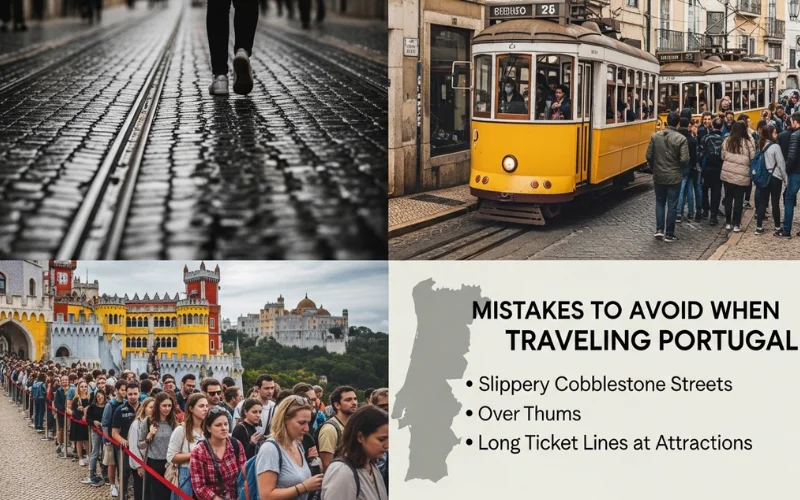 This is what trips people up most of the time after I spoke to dozens of travelers and made several of these mistakes myself.
- Wearing the wrong shoes. The cobblestone streets of Portugal (calcada portuguesa) are beautiful but actually dangerous being extremely slippery when wet. Good grip flat shoes are necessary. Heels and flat soled sneakers equal a fall.
- Only visiting Porto and Lisbon. These two are beautiful cities, however, it is not Portugal. The actual magic lies in the gaps between them and other places.
- Skipping Portuguese food for familiar options. The food culture of Portugal is underestimated. Bacalhau (salt cod), grilled octopus, caldo verde (green soup), arroz de marisco (seafood rice) and piri-piri chicken are all worthy of your attention. Do not dine in a restaurant that shares photos on the menu in an area of a tourist attraction spot.
- Failing to learn some basic Portuguese. The Portuguese like any form of effort. Even such expressions like obrigado/obrigada (thank you) and bom dia (good morning) will help. And never, by any means, talk Spanish to Portuguese. This is not the same language and they observe.
- Road driving in Lisbon city. City driving is misery of narrow streets, tramways that fight, one way streets (confusing), and parking that is costly. Ride on the train or Uber or Bolt.
- Underestimating the hills. Lisbon and Porto are both highbrow cities. Provided that you have mobility issues, make preparations before traveling and use funiculars, elevators, and taxis in areas that are steep.
- Going to Sintra without reservations. This reoccurs since it is the one most frequent error. The face-to-face ticket queues may take more than 90 minutes during summer.
FAQs: Your Portugal Travel Questions Answered
Where is the most recommendable place to visit in Portugal as a first-time visitor?
To start with, consider Lisbon, Sintra and Porto. The three in themselves is a savory introduction to the Portuguese culture, history, cuisine and architecture. You have at least a week, you add the Algarve in case of beaches or the Douro Valley in case of wine country. This mix is the most best places to visit in Portugal that will not overwhelm you or consume too much time transit.
How long do you have to be in Portugal?
A satisfying trip that takes three or two major destinations should take at least seven days. The extra 10 days will allow you to make some really valuable stops and 14 days will be enough to fully explore the country with the help of the Algarve, Central Portugal, and the North. When you have five days you better stay in Lisbon (including Sintra) and Porto instead of overloading your schedule with too many destinations.
What is the best time of year to visit Portugal?
The month of May, June, September, and early October would be the most optimum time of the year because the weather is warm, the crowds are not large and the prices are fair. July and August are the hottest months and these months are the most active months as far as tourism is concerned, especially in the Algarve.
Winter is not very cold as rest of Europe and is ideal to explore the cities of Lisbon and Porto, albeit a bit of rain.
Do you need a car to travel around Portugal?
Not for the major cities. Metro, tram, and ride-hailing applications are well represented in Lisbon and Porto. The major cities are linked through trains. The Alentejo, Douro Valley, Peneda-Geres, traveling the coast of the Algarve beyond the major towns, are all well served by a car, though. When renting, use the services of the special agencies and carefully go through the insurance conditions.
Is Portugal expensive to visit?
The destination of Portugal is also cheaper in Western Europe as the prices in Lisbon and Porto have grown a considerable price percentage in recent years. A regular tourist will be free to spend between 110-200 euros a day on accommodation, meals, and transport. A budget traveler can live on 50-85 Euros per day on hostel accommodation and local tascas (tavern) food. Even transportation, wine, and coffee are still very cheap.
Should I fly to Lisbon or to Porto?
If you can, do both. An open-jaw ticket (going in and going out of a destination) will help to escape the need to come back and spend as much time as possible. Among the two, Lisbon will be a more favorable selection given that it is centrally located and can easily be reached to Sintra, the Alentejo, and at the Algarve. Porto is a better place of entry when you are targeting North and the Douro valley.
Is Portugal safe for tourists?
Portugal is always among the countries that are safe in Europe. Attacks by tourists are extremely hard to come by. There is petty theft (pick pocketing) in tourist spots with a lot of people and most especially in Tram 28, Bairro Alto and in the markets in Lisbon. Be sensible, lock up valuables and you will be all right. Most neighborhoods are safe even at night when Portugal is alone walking.
What food should I try in Portugal?
Begin with pastel de nata (custard tart), and then move on to francesinha (the meat sandwich of Porto), bacalhau a bras (shredded salt cod with eggs and potatoes), caldo verde (kale and sausage soup), polvo a lagareiro (roasted octopus with olive oil), and arroz de marisco (seafood rice). The Portuguese food is nutritious, tasteful and founded on great ingredients. We have local food guides to find out more about local food experiences.
What are the hidden gems in Portugal most tourists miss?
Alentejo as a region is quite underestimated with amazing food, wine and scenery. Some of the more obscure attractions are Monsanto (a village cut into boulders), Ponte de Lima (the oldest town in the country), the network of Schist Villages in Central Portugal, Comporta (a fashionable though non-crowded beach resort) and Peneda-Geres National Park. The eastern Algarve between Tavira and Olhao is also much less congested than the western one.
Is the Algarve worth visiting, or is it too touristy?
It depends on where you go. The strip of Albufeira may remind you of a standard resort resort, however, Lagos, Sagres, and the Ria Formosa which surround Faro and Olhao are full of Portuguese flavor and breathtaking natural scenery. Travel during shoulder season (May, June, or September) and avoid the main front of the tourist congestion heading either west or east.
Can you visit the Azores or Madeira as part of a mainland trip?
Yes, but allow at least three or four additional days on each of the island groups. Low cost airlines such as Ryanair and TAP also have flights between Lisbon and Porto to the two archipelagos with prices as low as under 60 round trip when booked in advance. The Azores is also rewarding at least four days on Sao Miguel, and Madeira at three to five days based in Funchal.
What are the most common mistakes that tourists commit in Portugal?
The most common errors are to wear soles with an anti-slip lining on cobblestones, not buying advance tickets to the palaces of Sintra, spending excessive days in Lisbon at the cost of the rest of the nation, dining in restaurants of the tourism traps with photo-menus, driving in the central part of Lisbon and not eating the local food besides pasteis de nata. Neither, do not speak Spanish to locals. Portuguese is their language by itself and even a simple attempt to speak it is valued by people.
Final Thoughts
Portugal rewards thee going deeper. The great cities are a good place to begin, yet the real magic lies in the small towns, the lonely shore, and those spots which are not featured in most top-ten lists.
Whichever of these best places to visit in Portugal you happen to end up on, go there with an inquisitive mind, bring good shoes, and leave time in your schedule so that you can have those sorts of unplanned experiences that always turn out to be the highlights.